ChemForge
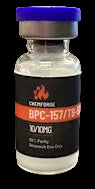
BPC 157/TB 500, 10mg
BPC 157/TB 500, 10mg
Couldn't load pickup availability
Wolverine Stack: BPC-157 & TB-500 Guide for Recovery, Tissue Healing, and Muscle Preservation
What is BPC-157?
Body Protection Compound-157 is a synthetic pentadecapeptide, a chain of 15 amino acids. The compound emerged from gastric protein research led by Predrag Sikirić at the University of Zagreb and was first described between 1991 and 1993. Early work focused on stomach ulcers. However, over the past few years, the scope has widened to include soft-tissue repair, particularly in localized injury models.
Research Areas
- Tendons
- Ligaments
- Muscle
- Gastrointestinal tissues
- Blood vessel formation
- Connective tissue repair
What is TB-500?
TB-500 is a synthetic fragment of thymosin beta-4, a naturally occurring 43-amino-acid peptide in the human body. TB-500 fragment, however, contains only seven amino acids. Most of the literature people cite for TB-500 was run on the OG thymosin beta-4. The mechanism associated with the peptide was cell migration. Thymosin beta-4 binds and sequesters monomeric actin, changing how cells reorganize their scaffolding and move toward damaged tissue.
Research Areas
- Muscle recovery
- Soft tissue remodeling
- Cellular migration
- Angiogenesis
- Inflammation pathways
- BPC‑157 is associated in preclinical and early clinical work with accelerated wound healing, gut and mucosal repair, tendon and ligament support, and modulation of inflammatory pathways.
- TB500 is linked to enhanced collagen deposition, cell migration, new blood vessel growth, and improved flexibility and recovery in soft tissues.
- When combined, the two create a synergistic “Wolverine” effect, where BPC‑157 tends to provide more local healing while TB500 offers systemic recovery support across multiple tissue types.
Share